Posted on Leave a comment

Low Power Audio Amplifier
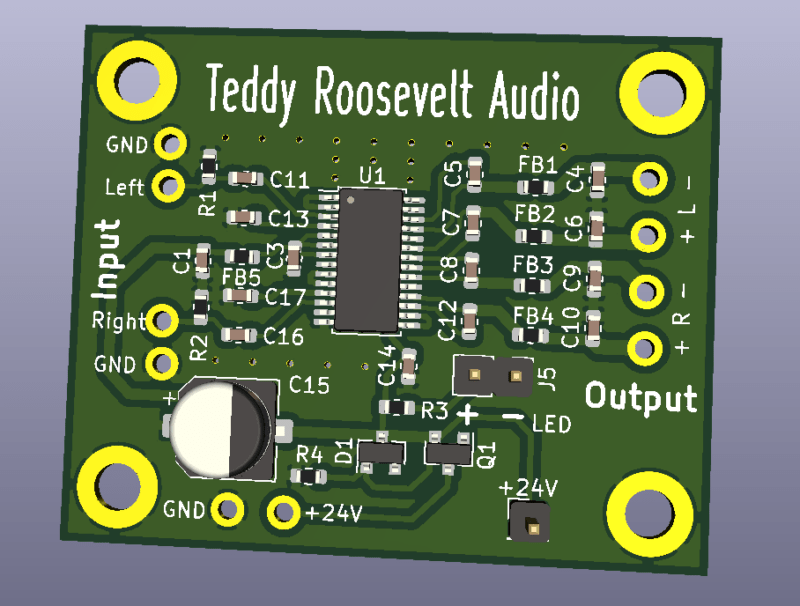
I needed a low power audio amplifier for my home audio setup. Nothing crazy. I basically wanted to match what a car stereo head unit could do. I didn’t want to fiddle with large power and I wanted something cheap. I had done plenty of PCBs for manipulating audio signals, but I had never tried an audio power amplifier before. Granted, this one is a baby, but it was a great way to get my feet wet cheaply.

I’ve used this audio amplifier every day for maybe 4 years. Great little gadget! No issues. Much like a car stereo, it surprises people how loud it is until it runs out of power when you need it and distorts all to hell.

No Markings?

Notice the input on the silkscreen has no instructions. Ahhhh! I would never do that now. I’d list the exact voltage and maybe current requirements right on the silkscreen for a board like this. I’d probably list the min speaker impedance on the outputs as well.

Old Kicad – No Ground Plane?

I’m 99% sure I used a ground plane on this thing. I can’t imagine a world where I wouldn’t have. However, and this is one of the problems with Kicad, when you open a project 4 years later with a different Kicad version, strange things can happen. I opened the .kicad_pcb file in Notepad++ and now I see I used Kicad 5.1.9 to design this board. (Human-editable files is a HUGE benefit to Kicad, btw.) Do I still have it on my computer? Maybe. I don’t plan on producing any more so it doesn’t matter.

Main Audio Chip. MPN: IS31AP2112 (Discontinued).

EDA Tool: Kicad

If you are interesting in the files, contact me. These files aren’t up to my modern standards, but I’ll share them to anyone who asks. I mostly just followed the datasheet examples, but there may be some clues in here that worked in the supporting circuitry.